 Image 1 of 3
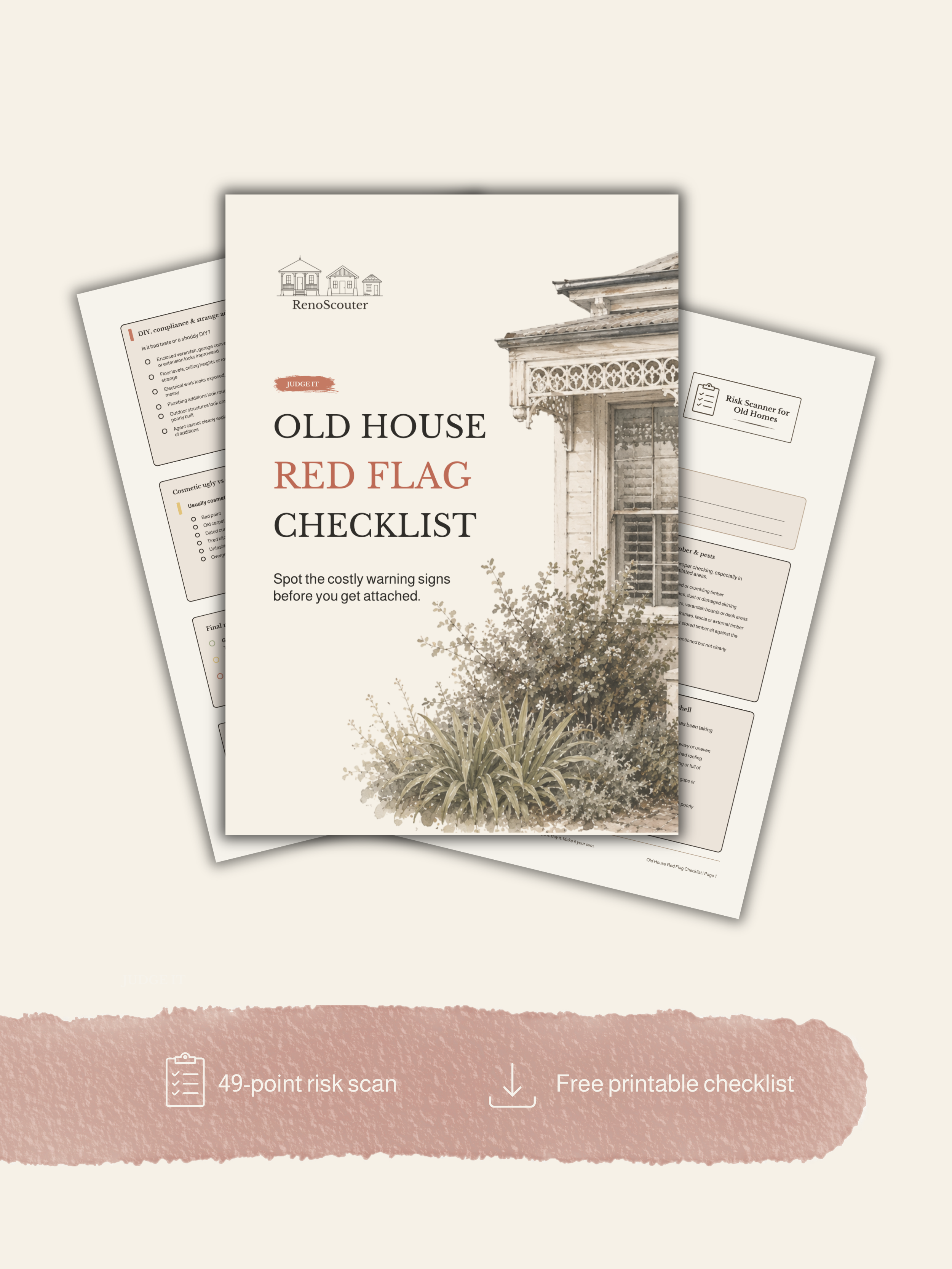 Image 2 of 3
 Image 3 of 3
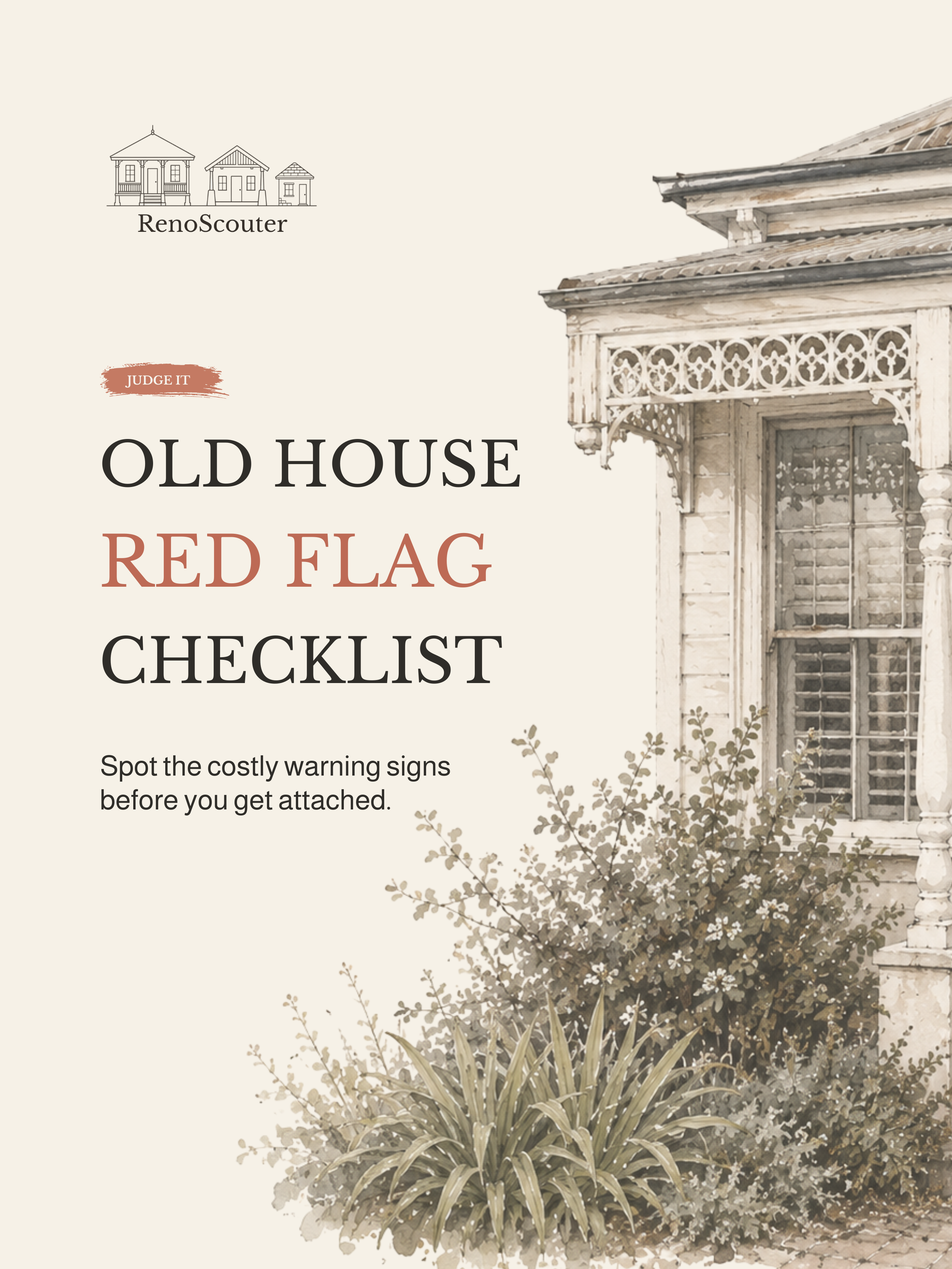
Old homes can be beautiful, generous and full of character and also be quietly expensive.
The free RenoScouter Old House Red Flag Checklist helps buyers look beyond charm, styling, old carpet and “just needs love” language to notice the warning signs that may affect the price, renovation plan or decision to proceed.
Use it at inspections, during second viewings or when comparing older homes that appear promising on the listing page.
moisture, mould and drainage problems
termites, timber damage and pest clues
cracks, movement and uneven floors
roof, gutter and external-shell issues
strange DIY work or unexplained additions
awkward layouts that may require major work
the difference between cosmetic ugliness and problems that need pricing or professional advice
The checklist does not diagnose defects. It helps you recognise when something deserves closer inspection instead of being dismissed, romanticised or accepted without understanding the possible cost.
This checklist is especially useful for buyers considering:
older or character homes
renovator’s delights
weatherboard, post-war, fibro, brick and period houses
properties with visible wear or deferred maintenance
homes with extensions, conversions or unusual alterations
houses that look inexpensive but may carry a heavy repair load
properties where cosmetic presentation may be hiding more serious problems
At an inspection, cosmetic ugliness and expensive problems can sit side by side.
Old paint, dated carpet and unfashionable tiles may be straightforward to change. Damp, termite activity, roof failure, structural movement, unsafe-looking work or unexplained additions may affect the value of the property and what you can realistically afford to do next.
This checklist helps you separate ordinary wear from warning signs that need proper inspection, pricing or professional advice.
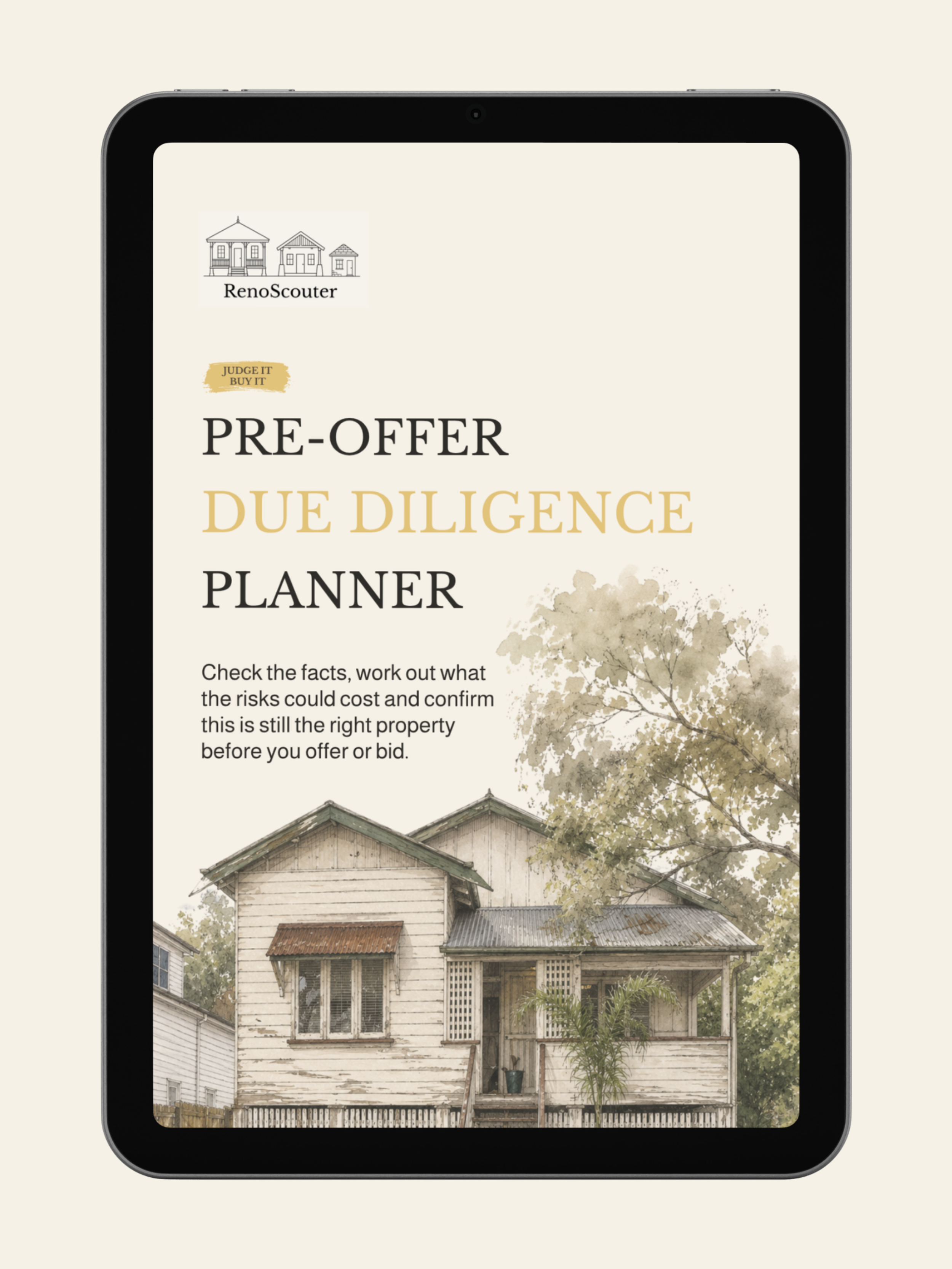
Use it after a property has shown enough potential to remain under consideration and before moving into contract, planning, finance and other pre-offer checks.
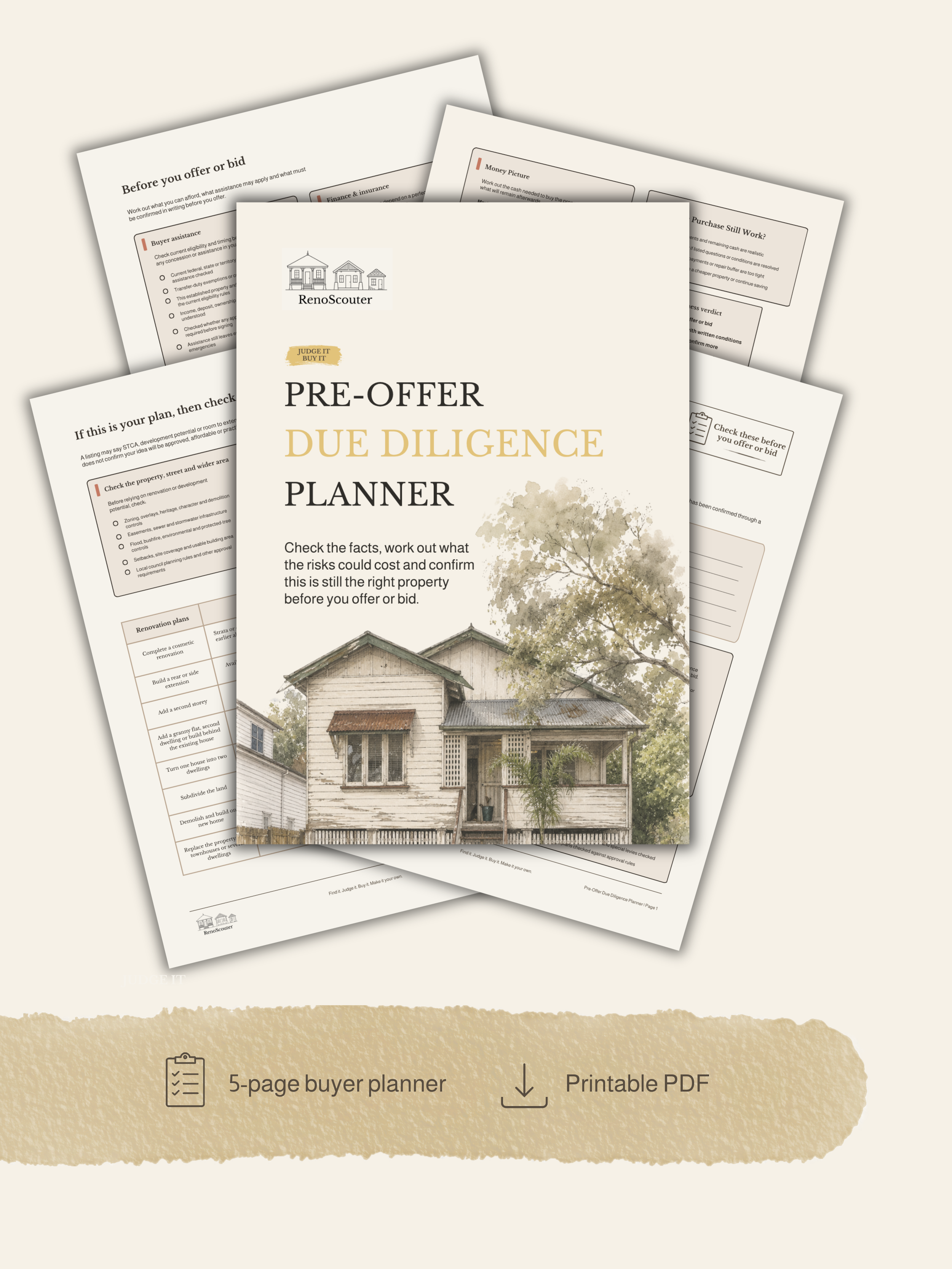
If no major red flags emerge, continue with the Pre-Offer Due Diligence Planner to confirm the facts that cannot be established through a visual inspection alone.
Download it before your next inspection and look for costly warning signs before you fall for the house.
Disclaimer: This checklist provides general buyer information only. It does not replace building and pest inspections or legal, planning, building, financial, lending, valuation, taxation, insurance or other property-specific professional advice. It cannot determine whether a defect exists or how serious it may be. Confirm concerns with appropriately qualified inspectors and specialists before making an offer, bidding at auction or entering a contract.