
52 Amos Street
ARCHIVED | Sold at auction 11 July 2026 | $1,440,000
WESTMEAD, NSW
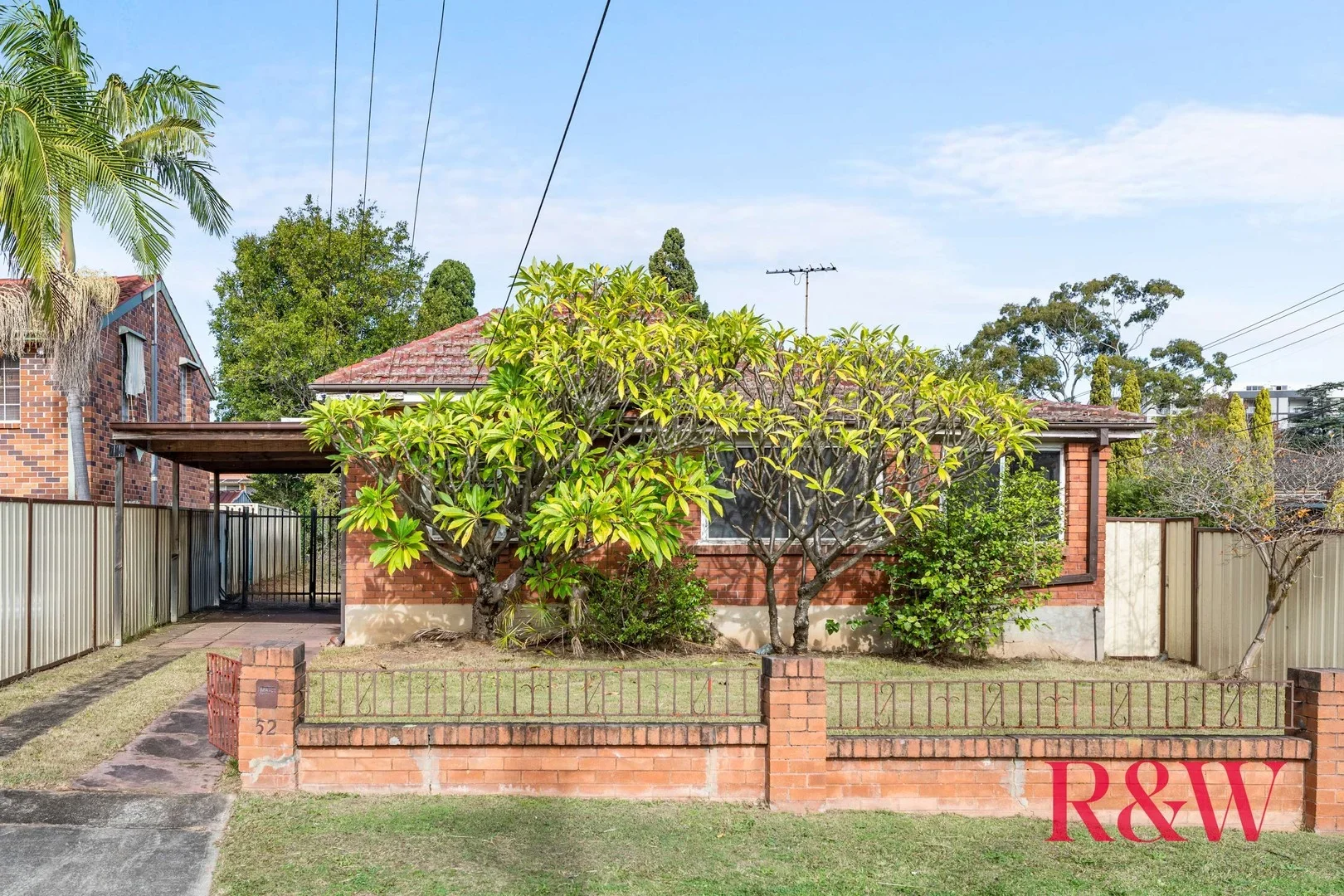
A brick character home with a sunny verandah and a rear layout worth rethinking
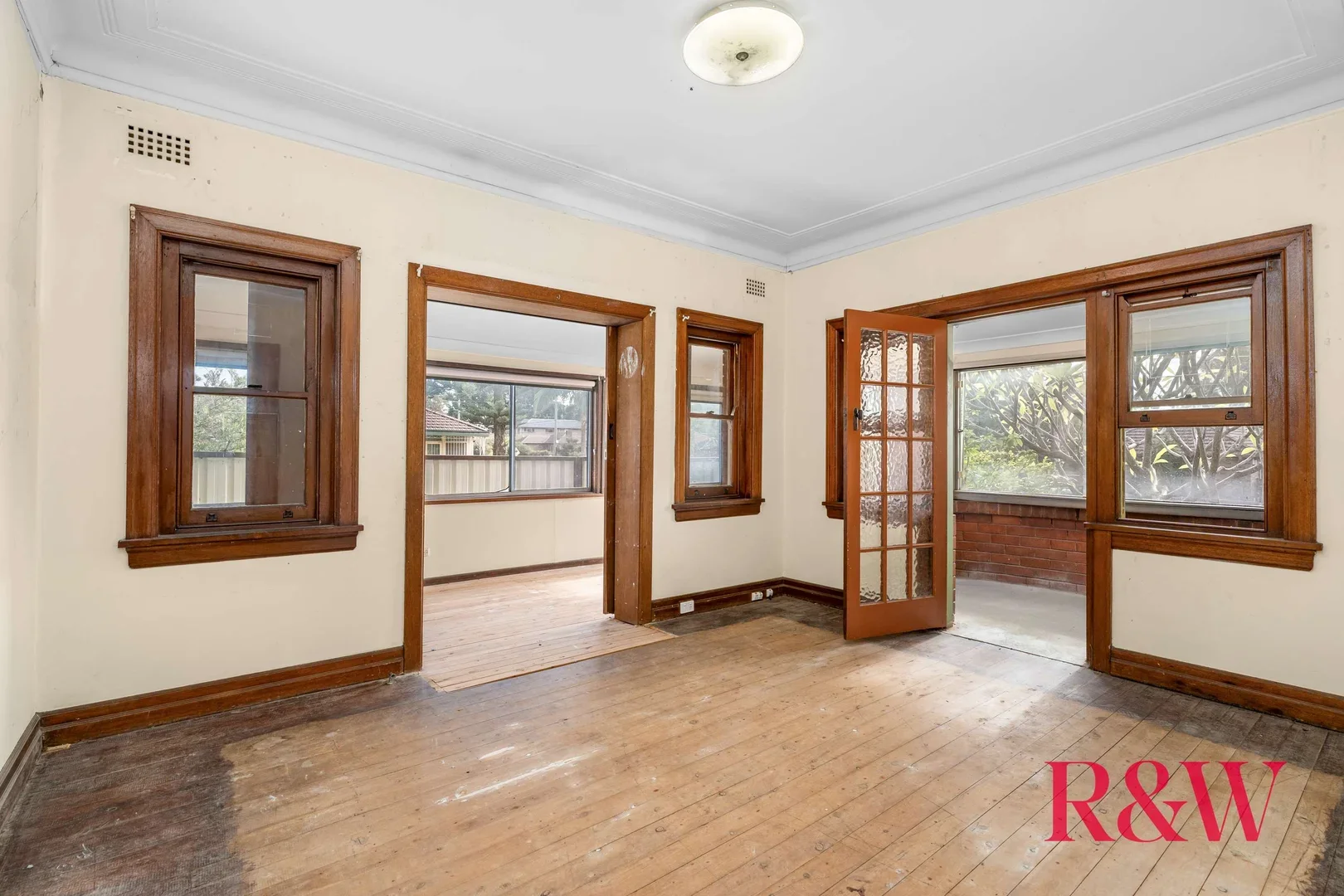
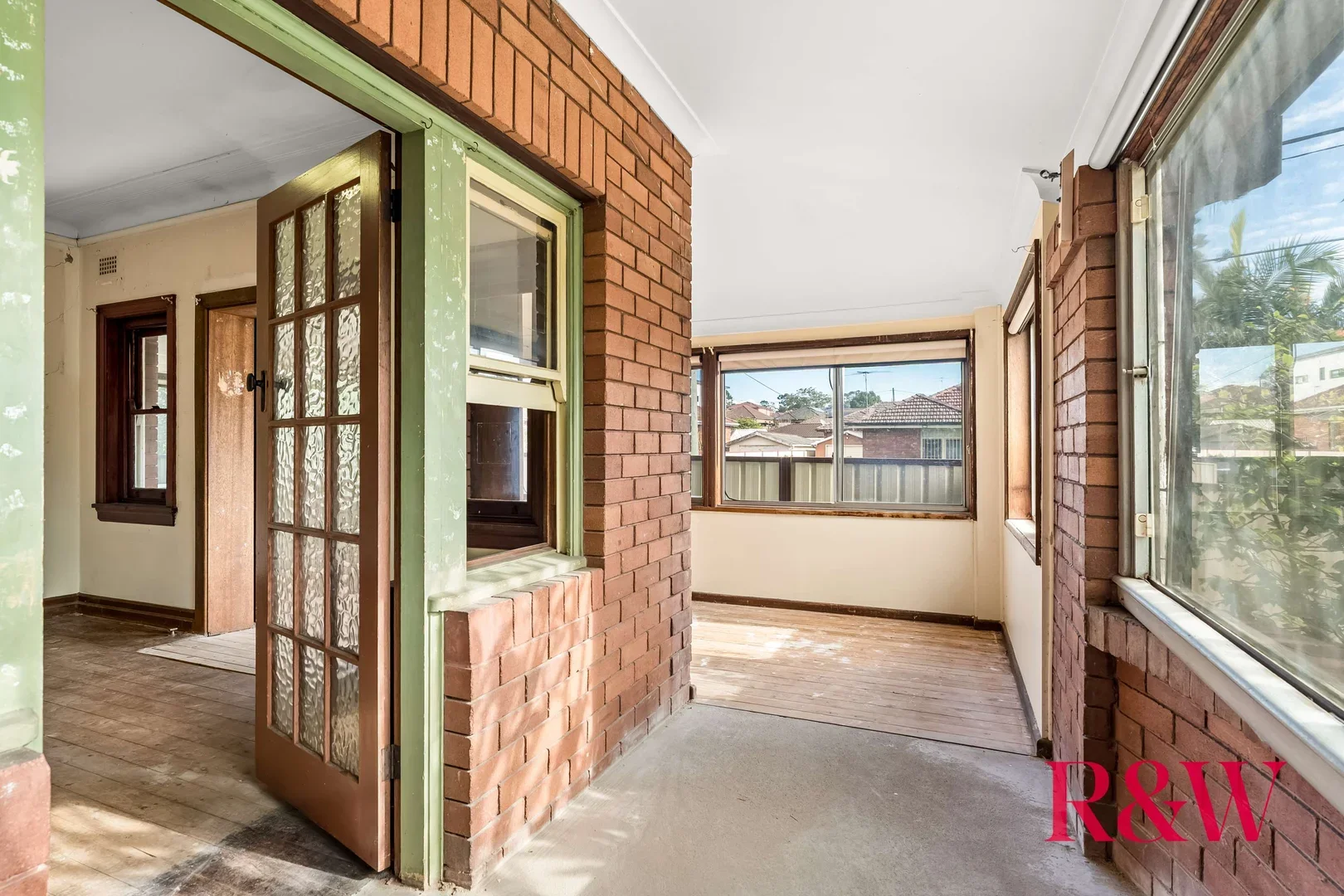
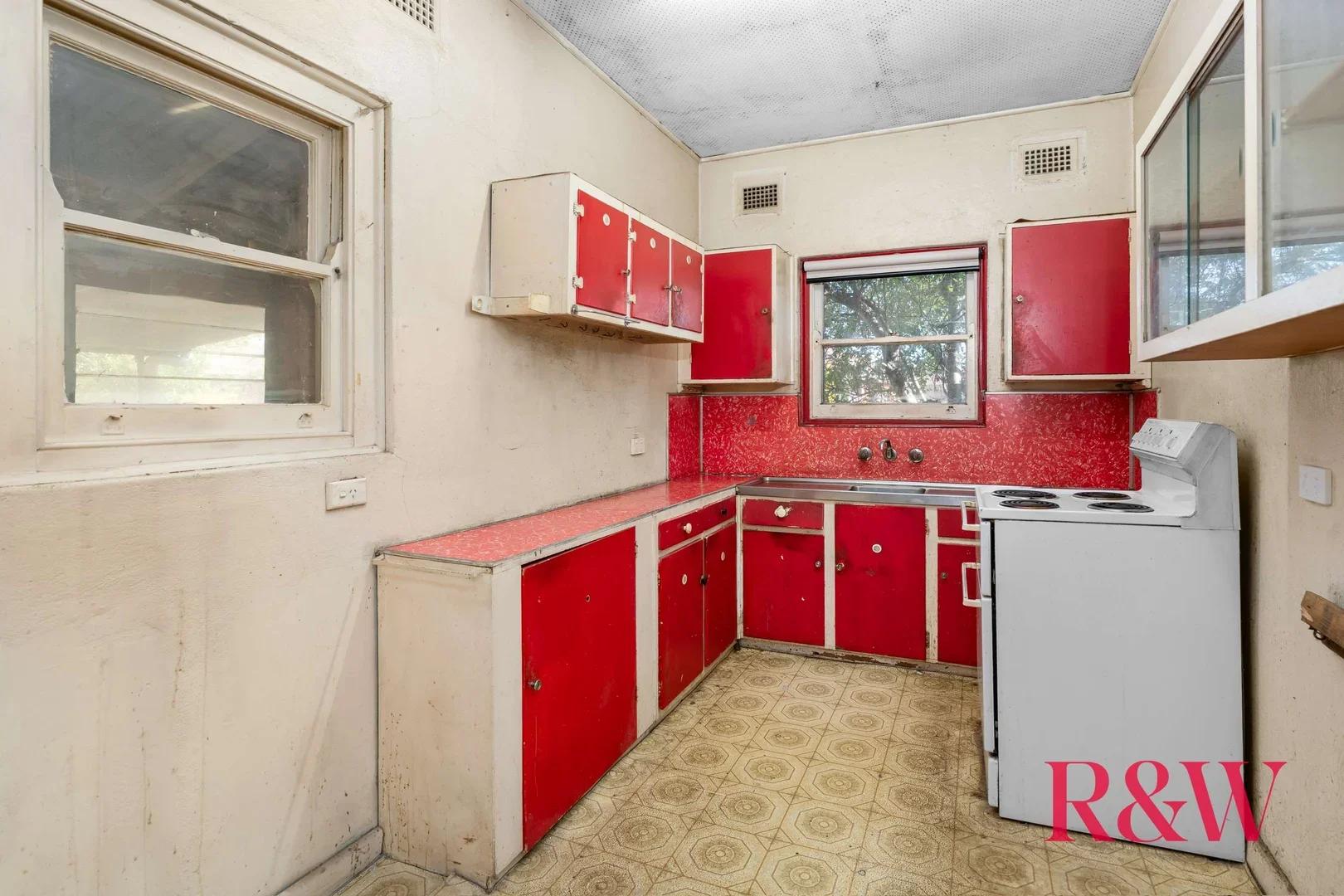
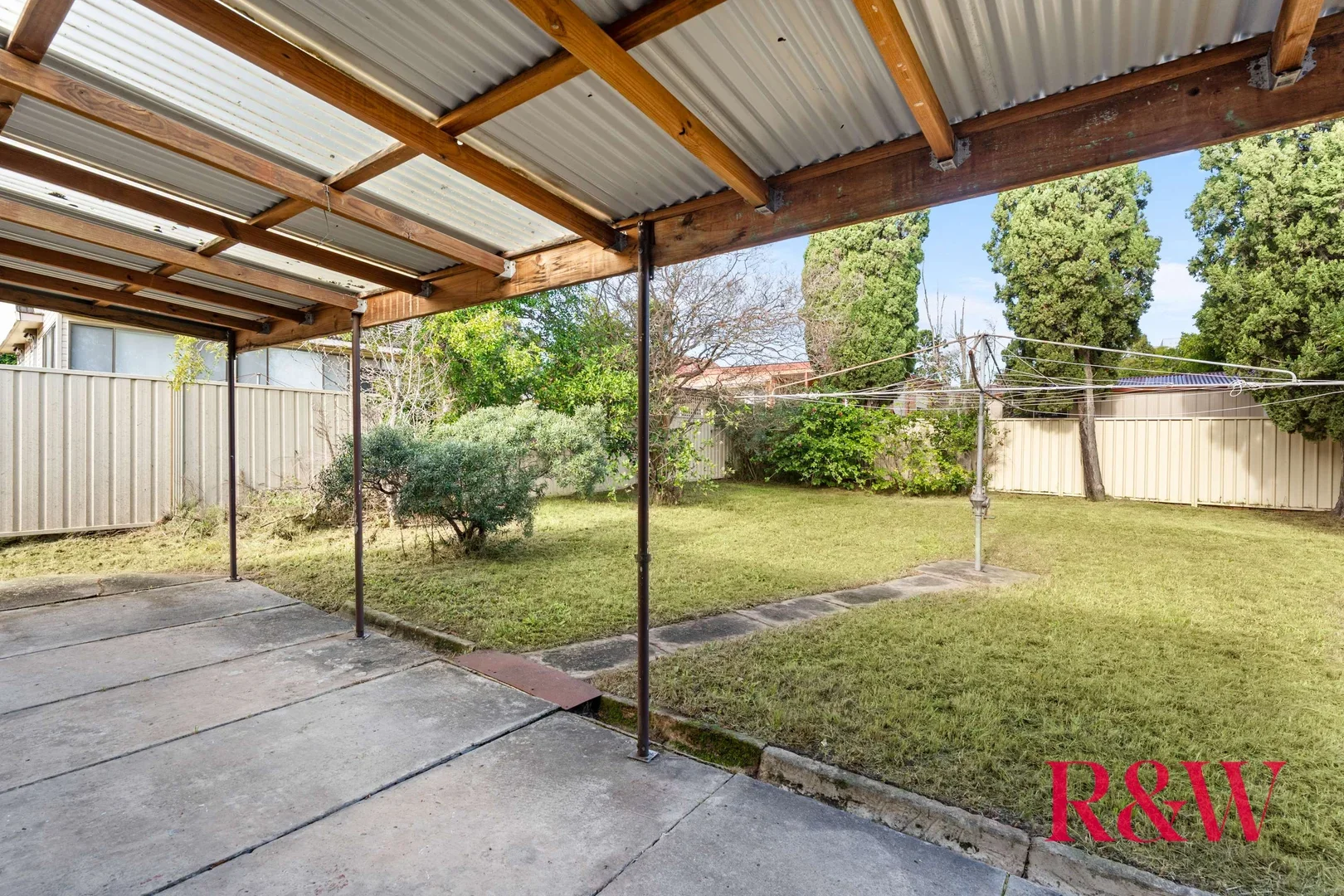
52 Amos Street has some lovely things to work around: substantial timber doorframes, decorative ceilings, a curved enclosed verandah and a backyard with established trees on a good-sized block. The two-bedroom layout could suit a smaller household after repairs and updating. For someone who needs a family home, the more interesting opportunity is to reconsider the kitchen, dining room and narrow rear sunroom together. That is where the house could gain better living space and a stronger connection to the garden. Its position near Sydney Smith Park adds to the appeal. The purchase price needs to leave room for substantial renovation, though it could also suit someone with a larger overall budget who wants to get into this pocket and shape the house around their needs.
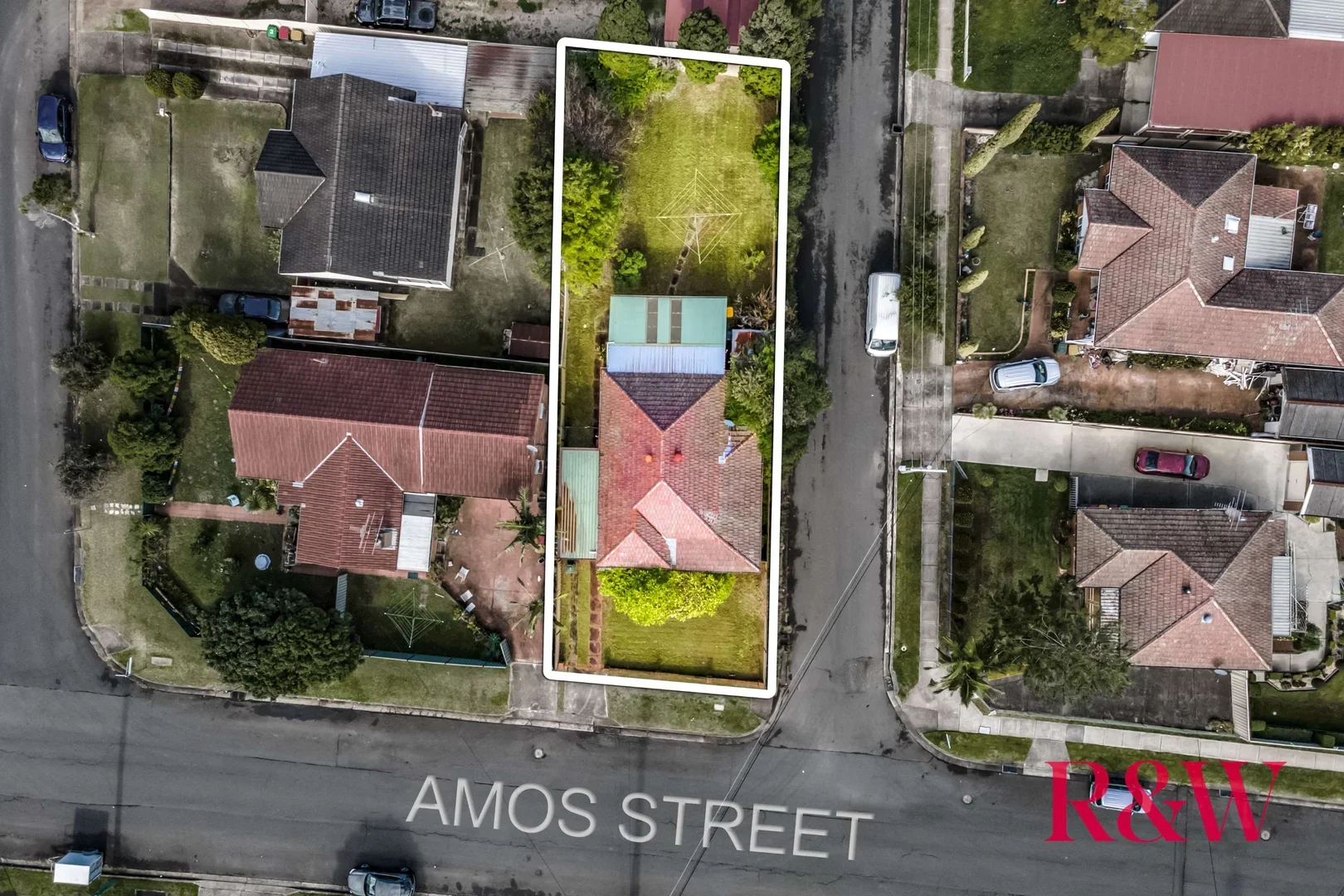
2 bed · 1 bath · 2 car · 524.8m²
Original brick home with wrap-around enclosed verandah
Auction (estimate $1.2m–$1.6m)
RenoScouter Snapshot
View original property listing →Why it made the cut
Two bedrooms, separate lounge and dining rooms and a good-sized backyard give this small house a useful starting point. The sunroom and enclosed verandah also create scope to make the rear work much better.
The opportunity
Restore the timber floors, replace the kitchen and bathroom, then decide how creatively to use the sunroom, enclosed verandah and rear living spaces without giving up the backyard.
The catch
This is a substantial renovation. Wet areas, services and general building condition need checking, while structural changes to the rear could quickly increase the scope of the project.
Is it worth buying?
At an estimated $1.2m–$1.6m, the question is how much room the purchase price leaves for the renovation. Nearby sales show why that matters.
Just before this house went to market:
7 Bridge Road sold for $1.58m in March. It had four bedrooms, two bathrooms and 563m², with much more work already done.
27 Amos Street sold for $2.02m in March. It was another older house on the same street, with three bedrooms and one bathroom, but on a substantially larger 800m² block.
20 Bernard Street sold for $1.86m in February. With five bedrooms, three bathrooms and 607m², it offered considerably more living space and showed what the extra spend could buy.
Renovation path 1:
restore + refresh
If two bedrooms are enough, there is no need to make 52 Amos Street bigger simply because there is room to.
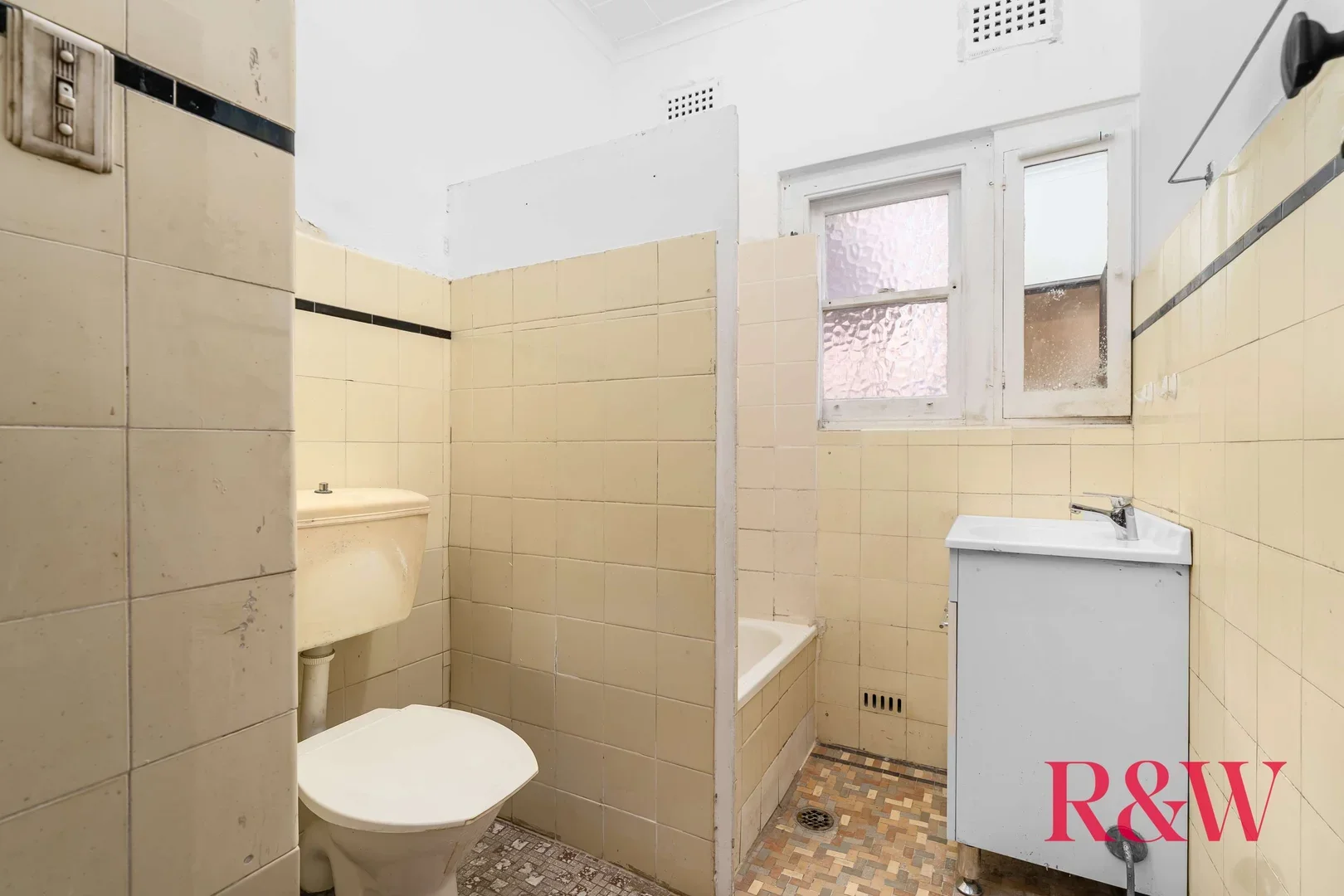
Restore the solid timber floors rather than replacing them if their condition allows it. Keep the timber doors and decorative architraves that give the interior some age and character. Replace the lighting and put the renovation budget into the kitchen and bathroom. Neither looks worth preserving in its current form, and the damaged bathroom tiling means condition and waterproofing matter more than its Art Deco-style label.
Outside, the red-brick façade is characteristic of the house’s period, so it is worth considering whether to keep it. If the brick is in good condition, cleaning and repairing it may be enough. Rendering could still work, but only if it improves the façade rather than removing one of the house’s more recognisable features.
A broad $100k–$160k renovation allowance could turn this into a much better small house while preserving the generous amount of land around it.
Using the midpoint of the estimate at $1.4m, NSW transfer duty is roughly $59k before any individual concessions. Add the $100k–$160k renovation allowance and the rough purchase + duty + renovation total comes to around $1.56m–$1.62m, before finance, conveyancing or significant repairs uncovered during inspection.
This path makes the most sense for a couple or smaller household that values the Westmead location and outdoor space more than bedroom count.
Renovation path 2:
Make better use of the floor plan
This is the one we would have more fun with.
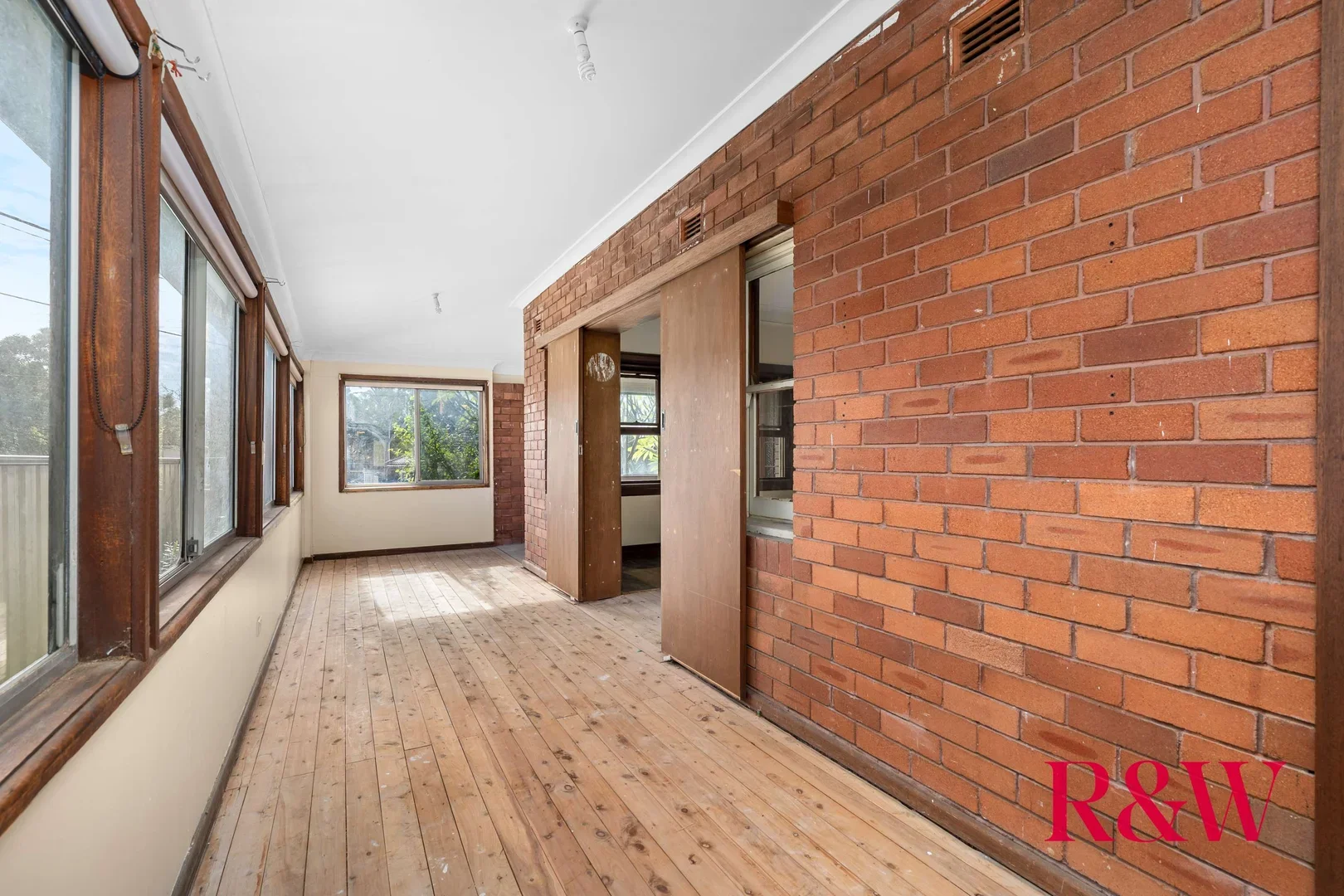
The lounge and dining room already work well as separate spaces. The sunroom, enclosed verandah and rear circulation are the parts of the plan that need rethinking. Instead of simply renovating those spaces as they are, use them to rethink how the back half of the house works.
Open up the relationship between the kitchen and dining room, reconsider what part of the verandah really needs to stay enclosed and create a much stronger connection to the backyard. Depending on the structure and dimensions, there may also be room to find a study, third bedroom or second bathroom without adding a large extension.
The dedicated lounge can stay. Not everything needs to become open-plan.
Allow roughly $180k–$300k+ for a more structural reworking. It is the more expensive option, but also the one most likely to turn 52 Amos Street from a basic two-bedroom house into something that feels genuinely tailored to the way its next owner lives.
Renovation path 3:
Knock down and start again
The agent suggests rebuilding or redevelopment, so it is worth testing the numbers.
A 524.8m² block is useful, but a two-dwelling outcome would use much more of the site and give up a lot of the outdoor space that currently makes it appealing. A single new home is easier to imagine, but considerably harder to justify financially.
Sydney knockdown-rebuild estimates put a standard four-bedroom project at roughly $450k–$900k+, including demolition, site preparation, construction and associated approvals and fees. Source: Dura Group Building & Renovations.
That takes purchase + duty + rebuild to roughly $1.7m–$2.15m. For a buyer determined to build a particular long-term home in this exact pocket, that may still be a choice they are willing to make. But the numbers now sit well beyond the original attraction of buying a modest house with room to improve.
So, is it really worth buying?
Yes, if you want the house or location. No, if you mainly want the land and a custom build.
Path 1 makes sense for someone happy with a smaller home and more land, especially if the purchase price leaves enough room for the renovation.
Path 2 is the strongest opportunity: use the sunroom, enclosed verandah and rear spaces to create a much better arrangement without giving up what makes the block appealing.
Path 3 doesn’t make sense for us as once the existing house is removed, the total spend moves into a very different part of the Westmead market and there are stronger sites to chase instead.
What needs checking?
The existing house
Timber floors. Confirm their condition, how much can be restored and whether damaged sections need replacing.
Bathroom. Loose or failing tiles could point to more than an ugly finish. Check waterproofing, moisture and the condition behind the surfaces.
Electrical and plumbing. An original house needing a full kitchen and bathroom renovation can significantly increase the budget.
The rear of the house
Sunroom and enclosed verandah. Confirm what was added later, what is approved and which walls can realistically be altered.
Kitchen and dining connection. Test whether opening these spaces improves the plan without creating unnecessary structural work.
Privacy and side boundary. Check how exposed the backyard is to the neighbouring property and whether planting or screening can improve privacy without sacrificing light or usable space.
The house itself
52 Amos Street, with its red face brick, tiled hipped roof and double-hung windows, fits the late interwar to early post-war Sydney bungalow/cottage tradition. Houses from this period often used simple brick forms, tiled roofs and fairly restrained detailing. Source: Inner West Council
The agent describes the bathroom as “Art Deco-style”. Art Deco bathrooms from the 1920s and 1930s often used geometric patterns, strong colour contrast, black-and-white or coloured tiles and chrome fittings. Source: Olde English Tiles
There are hints of that here, but not enough to make this a bathroom worth preserving for its period value alone. The damaged tiling and overall condition matter more.
The stronger character is in the solid timber floors, timber doors and architraves. Architraves are the timber mouldings around doors and windows. In houses of this era they were often broader and more noticeable than the minimal trim used in many newer homes. They are not rare, but together with the floors and doors they give the interior some age and character.
The sunroom is one of the more interesting parts of the plan. In Australian houses of this period, sunrooms were usually small, light-filled secondary rooms, often along the side or rear of the house. Depending on the household, they might be used for sitting, sewing, children, breakfast, reading or simply as flexible extra space.
They were also sometimes created later by enclosing verandahs or other semi-outdoor areas as families needed more room. That makes the sunroom and enclosed verandah at 52 Amos Street useful clues to how the house may have changed over time.
It also means the current floor plan should not be treated as something that has to be preserved exactly as it is. These spaces were often adapted to suit changing family needs, and the next buyer can do the same. The useful thing to keep in mind is that a sunroom usually exists because that part of the house gets good light. Whatever happens there next should make use of that rather than lose it.
Westmead at a glance
The agent calls this one of Westmead’s “most sought-after pockets”. In other words, 52 Amos Street sits within a part of Sydney where transport, major employment and everyday services are concentrated.
Westmead Station gives the suburb heavy rail access, while the L4 Parramatta Light Rail has connected Westmead, Parramatta and Carlingford since December 2024. Sydney Metro West is also underway, with Westmead planned as the western end of the line and opening targeted for 2032.
Westmead is also a major health and education precinct. Westmead Hospital, The Children’s Hospital, Westmead Private Hospital, university teaching and medical research bring a large concentration of workers, students and visitors into the area every day. That makes the location particularly useful for people working in healthcare and related fields.
For day-to-day life, Westmead Public School is about a 15-minute walk, while Amos Street itself has small pockets of green space at Sydney Smith Park and Howe Street Park. Nearby Parramatta Park is the bigger draw, with open parkland, cycling and walking routes, picnic areas and the Domain Creek Playground on the Westmead side, with a flying fox, trampolines and play equipment.
Everyday shopping is also reasonably practical rather than requiring a trip into central Parramatta for everything. There are shops around Westmead Station and the health precinct, including Coles Westmead, while Westfield Parramatta and the wider Parramatta CBD give you the much larger retail, dining and services offer when you need it.
Westmead is not a uniform suburb, so micro-location matters. Amos Street gives you access to the things that make the area valuable: transport, jobs, schools, healthcare and major services without being part of the denser precinct itself.
Westmead’s median age was 33 at the 2021 Census, with 4,246 families living in the suburb, reinforcing its younger, family-oriented profile. Source: ABS Census
Resale and rental appeal
Westmead has a broad pool of potential buyers and renters because the hospital precinct, station, light rail and Parramatta employment are all close by. For Amos Street, that makes the location more important than the house in its current two-bedroom form.
The median rent is $650 a week for two-bedroom houses, $750 for three bedrooms and $900 for four bedrooms in Westmead. Source: Domain
That gives Path 2 another argument: if the floor plan can become a genuinely useful three-bedroom home without an oversized extension, it broadens both the rental and future resale audience.
We would not buy 52 Amos Street primarily for yield. At a purchase price somewhere within the $1.2m–$1.6m estimate, the stronger case is owning a detached house on a medium sized block in a highly connected part of Westmead and improving it in a way that gives the next buyer more reason to choose the house as well as the location.
Related RenoScouter
If this house raised questions for you, keep going with:
Old House Red Flags Checklist
What to check before committing to an older home with renovation potential.
Buyer tools
Checklists, worksheets and guides for finding, judging and renovating a house with potential.
More houses with potential
See the latest properties selected and analysed by RenoScouter.
